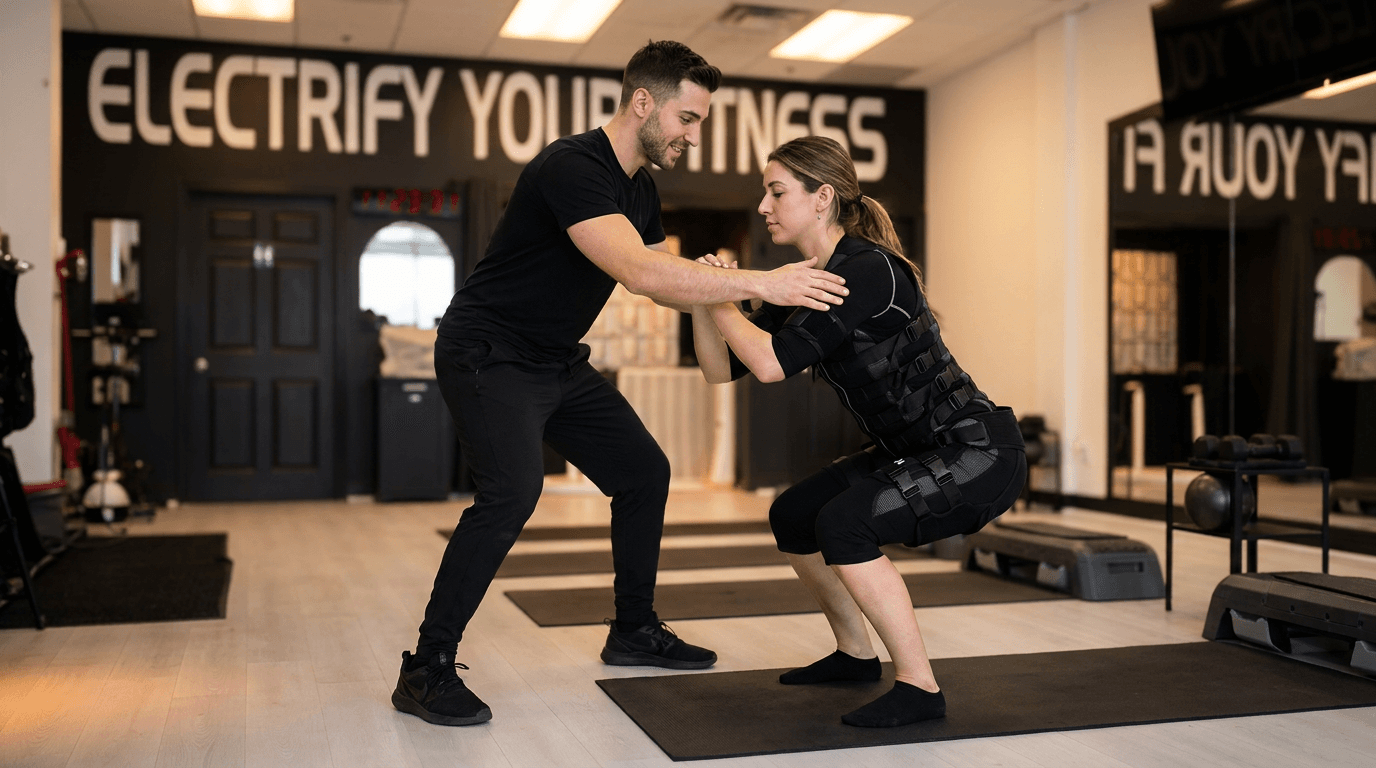

Hiring a personal trainer is one of the best things you can do for yourself, but nobody tells you the price until you are already on the phone feeling a bit awkward about it. So let us just lay it out. Here is what personal training actually costs, what pushes the price up or down, and how to make sure you get your money’s worth instead of paying someone to count your reps.
What you are actually paying for
A good coach is not just a rep counter. You are paying for a plan built around your body and your goals, real eyes on your form so you do not get hurt, and someone who keeps you turning up on the days motivation has clearly left the building. That last part is the whole game. Most people do not stall because they are short a gym, they stall because nobody is in their corner holding them to it. A good coach fixes exactly that, and that is the part worth paying for.
The typical price range in 2026
Let us put rough numbers on it, because nobody else will. In most of the GTA, private personal training runs somewhere around 70 to 120 dollars an hour, sometimes more for a big-name trainer in a private studio. Small-group and semi-private training usually lands lower per session, because the coach’s time is shared across a few people. Packages and memberships almost always work out cheaper per session than booking one at a time. The spread is wide because you are not really buying an hour, you are buying a result, and those are priced very differently.
What changes the price
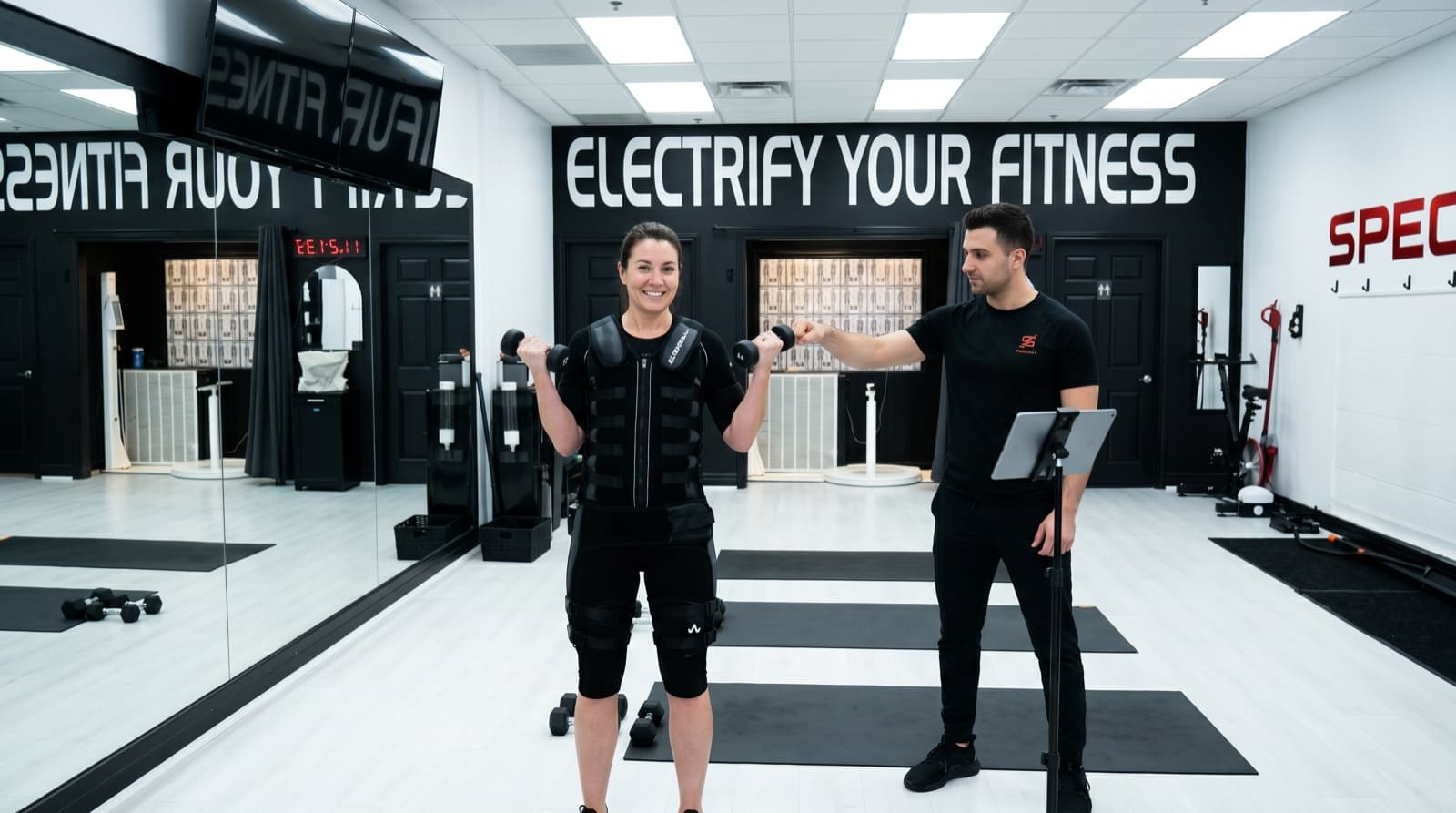
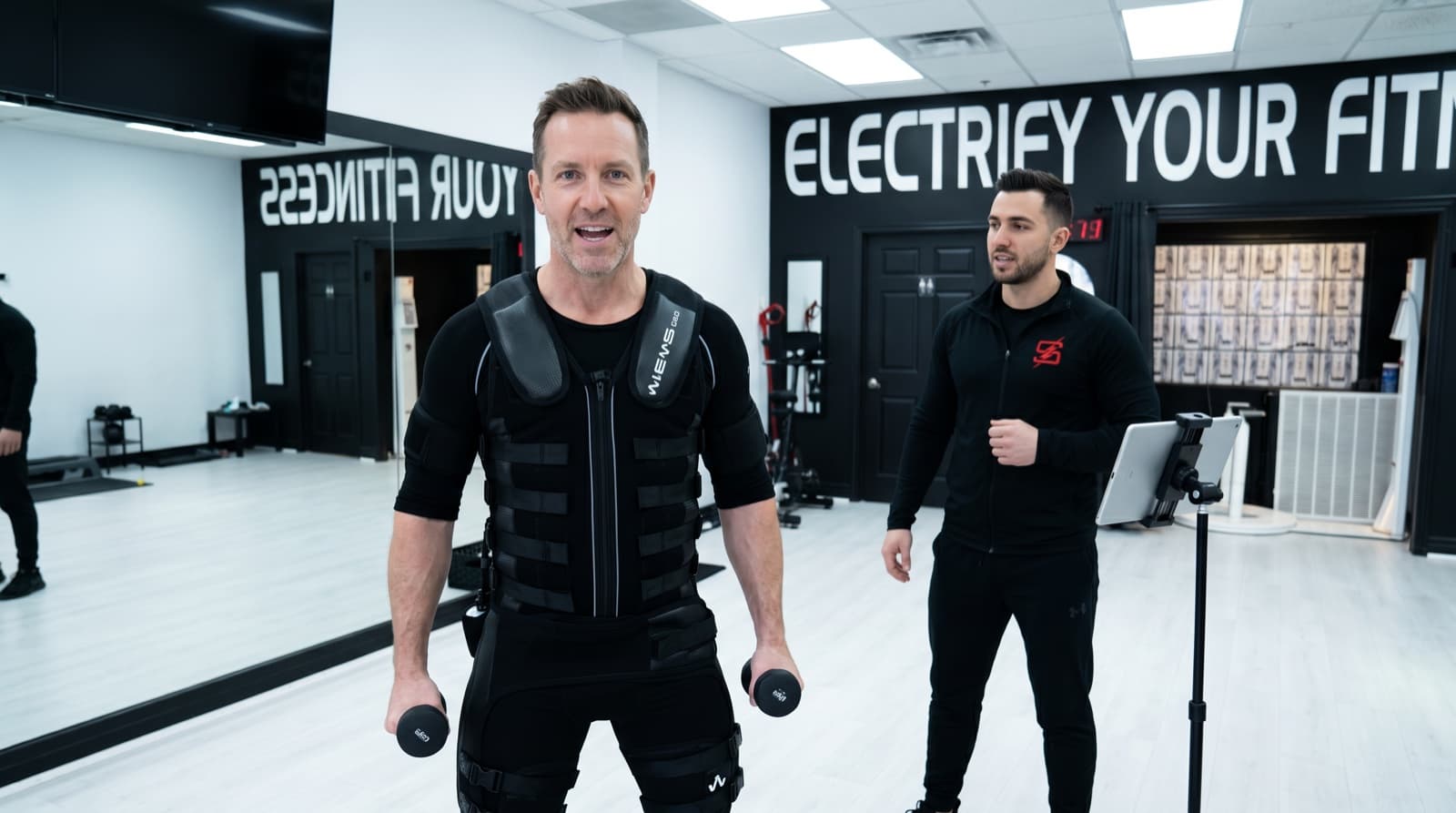
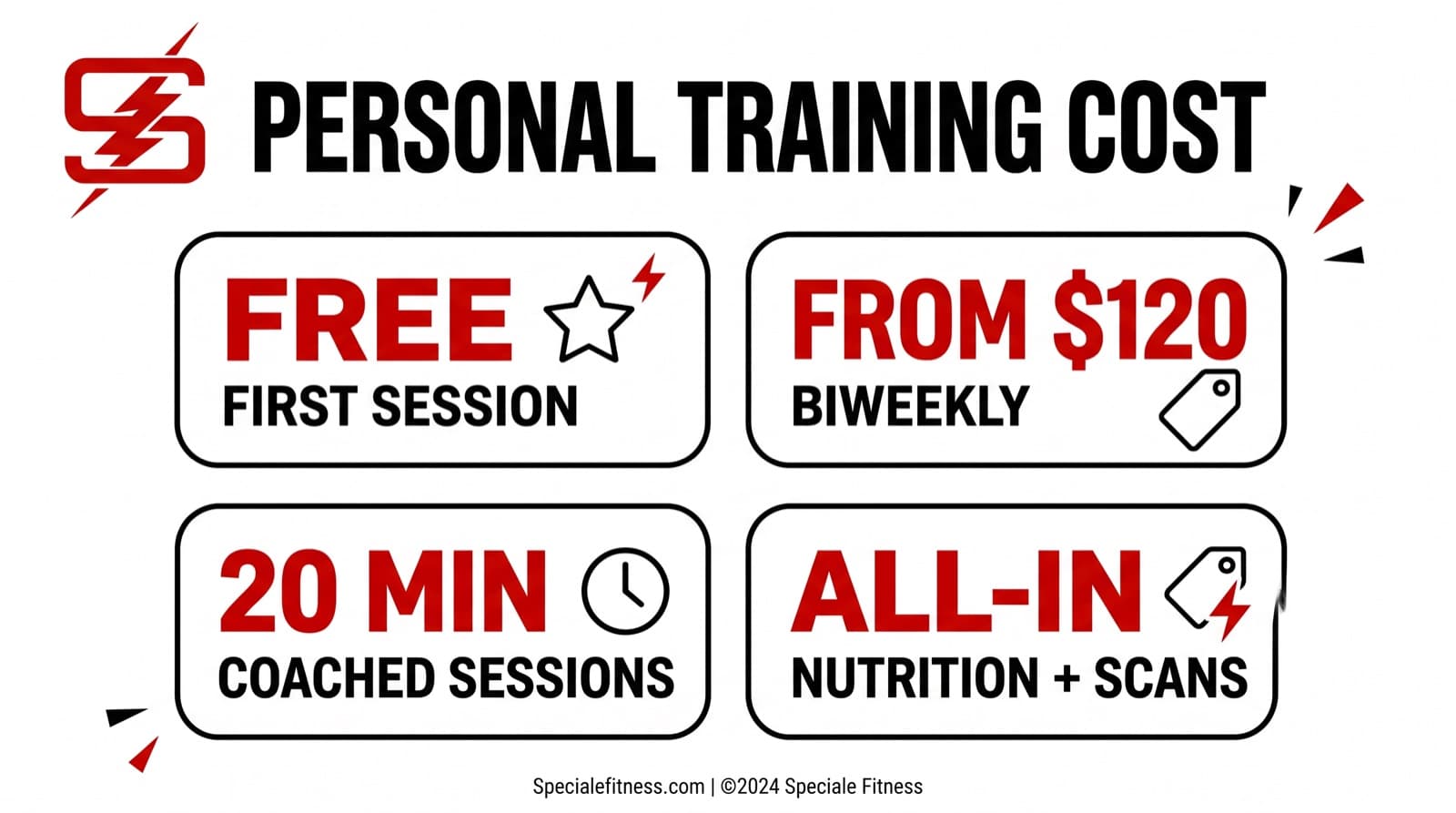
A few things move the number: whether you train in a small group or solo, how often you go each week, and whether sessions run a full hour or a shorter, higher-intensity format. Buying a package almost always works out cheaper per session than paying as you go. At Speciale, our EMS sessions sit in a smart middle ground, coach-led and semi-private, but only 20 minutes, because the suit works far more of your muscle at once. You get real coaching attention without handing over your whole evening or your whole paycheque.
Solo, small-group, or EMS: which is worth it?
Pure private training gives you the most undivided attention, and it costs the most to match. Big group classes are cheap, but you are basically following along at the back with nobody correcting your form. Semi-private training, which is what EMS at Speciale is, sits in the sweet spot: a small group, a coach who actually knows your name and your goals, and a price that does not make you wince every month. For most people who want real coaching without private-training money, that middle option is the smart buy.
Why package deals win
Paying session by session feels flexible, but it quietly costs you twice: more per session, and an easy excuse to skip when you are tired. A package or membership flips both. The per-session price drops, and because you have already committed, you are far more likely to actually show up, which is the only thing that ever produces results. The cheapest training in the world is worthless if you talk yourself out of going. A small standing commitment is often what turns “I should work out” into “I work out”.
Cheaper is not always better value
The lowest hourly rate can quietly become the most expensive option if the sessions are generic, rushed, or you stop showing up. The question that actually matters is not “what is the price per hour”, it is “what is the price per result”. A coach who tracks your progress, adjusts your plan, and keeps you consistent will take you a lot further than a bargain trainer you see twice and never again. Paying a little more for someone who actually moves the needle is usually the better deal.
The hidden costs people forget
When you compare prices, look past the headline rate. A cheap gym membership plus a trainer plus the commute plus the parking plus the hour and a half it eats out of your evening adds up to a lot more than the sticker says, in both money and time. Short, efficient, coach-led training that gets you in and out in well under an hour quietly saves you the most expensive thing of all, which is the time you would otherwise spend not training because the whole production felt like too much effort.
How EMS changes the cost equation
EMS shifts the maths because the workout is so much shorter for the same result. You are paying for 20 focused minutes instead of an hour, which means a coach can give real attention to a small group without the per-person price climbing the way private training does. You also need fewer sessions per week, because each one works so much of your muscle at once. Less time, fewer sessions, real coaching, that combination is hard to match on a traditional per-hour model.
What you get at Speciale for the price
A Speciale membership is not just access to a suit. Depending on your plan it folds in coach-led EMS sessions, AI-app nutrition guidance, Fit3D body scans so your progress is measured rather than guessed, and a coach checking in on you between sessions. That is the stuff that actually produces a change you can see, bundled into one price instead of bolted on as extras. When you compare it to a gym membership plus a separate trainer plus a nutrition app, the value adds up quickly.
Questions to ask before you pay
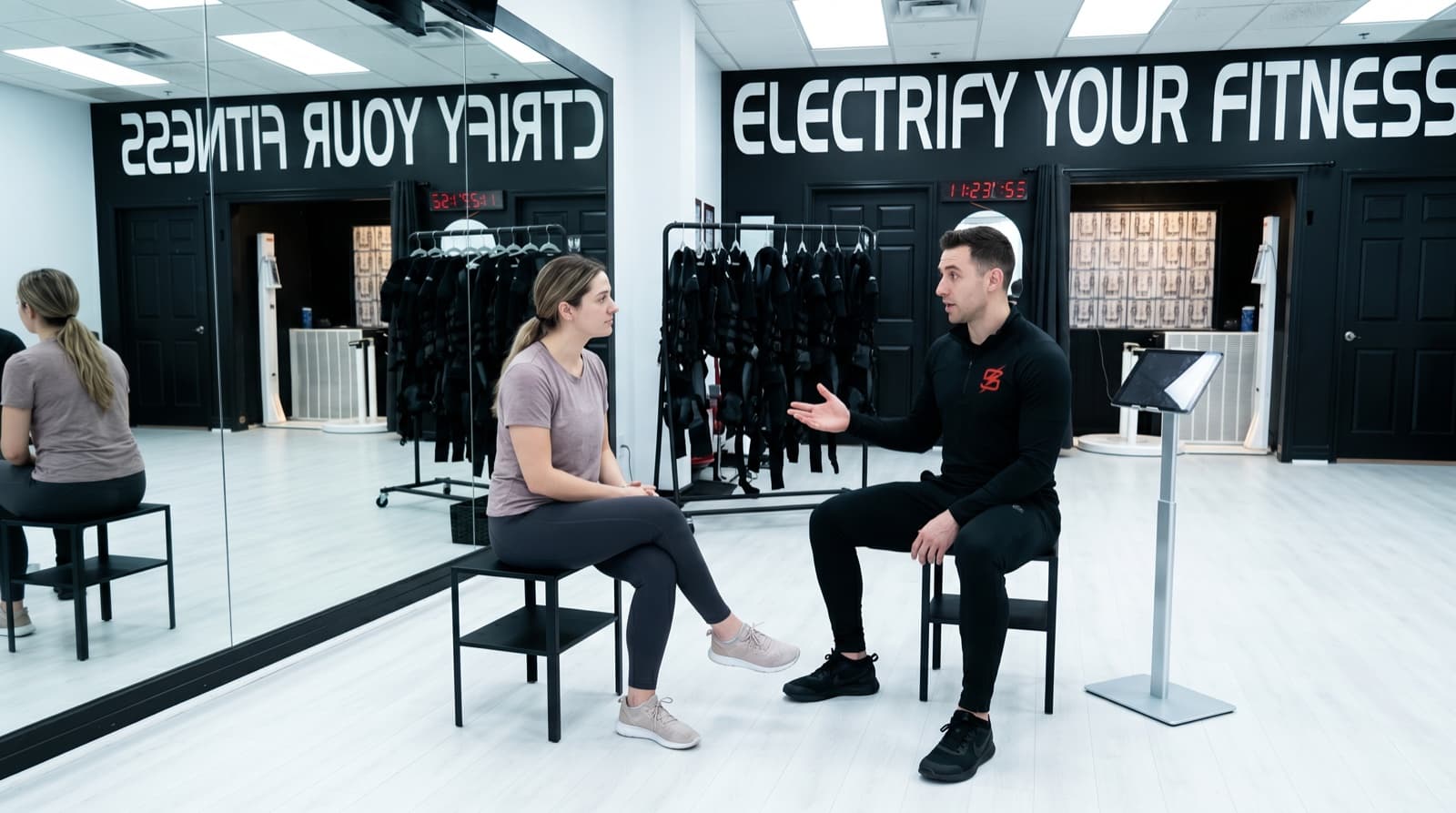
Before you hand over a card, ask a few simple things. Will a coach actually watch and correct me, or am I on my own? How do you measure my progress? What happens if I miss a week? Is nutrition part of this or a separate cost? And, honestly, how easy is it to keep this up on a normal schedule? The answers tell you whether you are buying a result or just renting access to a room. A good studio will answer all of them without flinching.
How to get the most for your money
Train at least twice a week, buy a package instead of one-offs, and pick a coach who measures your progress so you can actually see it working. Add some simple nutrition guidance and the results land faster, which makes every dollar stretch further. The best way to judge value is to feel it, so your first session at Speciale is free. You can test the coaching and the results before you spend a cent, then decide for yourself.
So, is a personal trainer worth it?
For most people, yes, as long as you pick the right kind. The value was never really in the exercises, which you can find for free online. It is in the plan, the form correction, the measurement and the accountability that get you to actually do them, week after week. If you find a setup that delivers all of that in a way you can sustain, a coach is one of the better things you will ever spend money on. The cheapest training is the kind you stick with, and that almost always means having someone in your corner.
Try your first session free
See what 20 minutes of EMS can do. One free session, no commitment, at our Vaughan or Mississauga studio.
Book Your Free SessionFrequently asked questions
How much does a personal trainer cost in 2026?
In the GTA, private personal training is often around 70 to 120 dollars an hour, while small-group and semi-private options usually cost less per session because the coach’s time is shared. Packages and memberships almost always work out cheaper per session than booking one at a time.
Is small-group or semi-private training cheaper than private training?
Usually, yes. Because a coach works with a few people at once, the per-session price comes down while you still get real attention and form correction. EMS at Speciale is semi-private, which is why you get coaching without private-training pricing.
Are personal training packages worth it?
For most people, yes. A package lowers your per-session price and, just as importantly, the commitment makes you far more likely to actually show up, which is the only thing that produces results. The cheapest training is the kind you stick with.
Why is EMS training often better value than a regular trainer?
EMS sessions are 20 minutes instead of an hour and work much more of your muscle at once, so you need fewer sessions and a coach can give a small group real attention without the price climbing the way private training does.
Is hiring a personal trainer actually worth the money?
For most people it is, as long as you pick the right setup. The value is in the plan, the form correction, the progress tracking and the accountability that get you to actually train consistently, not in the exercises themselves, which are free online.